Frequently Asked Questions
1. Who is the applicant?
Qualitas Energy is a leading renewable energy investment funder with 20 years’ global experience, including the development and operation of solar farms.
Qualitas Energy is currently constructing its first UK solar farm near Melton Mowbray (50MW), and is actively progressing six solar farm planning projects around the country together with onshore wind projects and a biomethane gas generating business, which has two operational plants and three consented plants being progressed into development.
The company has a team of c. 30 employees operating across three strategic locations in the United Kingdom: London, Bristol, and Edinburgh. The team is made up of professionals (land, grid, development and planning) with long and successful careers in developing solar projects within the UK.
Qualitas Energy is committed to building a relationship with the community near the Fraxinus site, including the delivery of a community benefit fund to support the delivery of local projects, groups and initiatives.
2. Where is the site?
Fraxinus Solar Farm site is on land near Greensforge, northwest of Ashwood and southwest of Hinksford and Swindon, in South Staffordshire.
3. How many homes would the solar generated electricity power?
The solar farm would generate enough clean, renewable energy to power the equivalent of approximately 16,200 homes. That’s equivalent to being enough to power all the homes in Kingswinford, Wall Heath and Wordsley North put together.
4. What do the proposals include?
At this stage, the project is currently planned to comprise of:
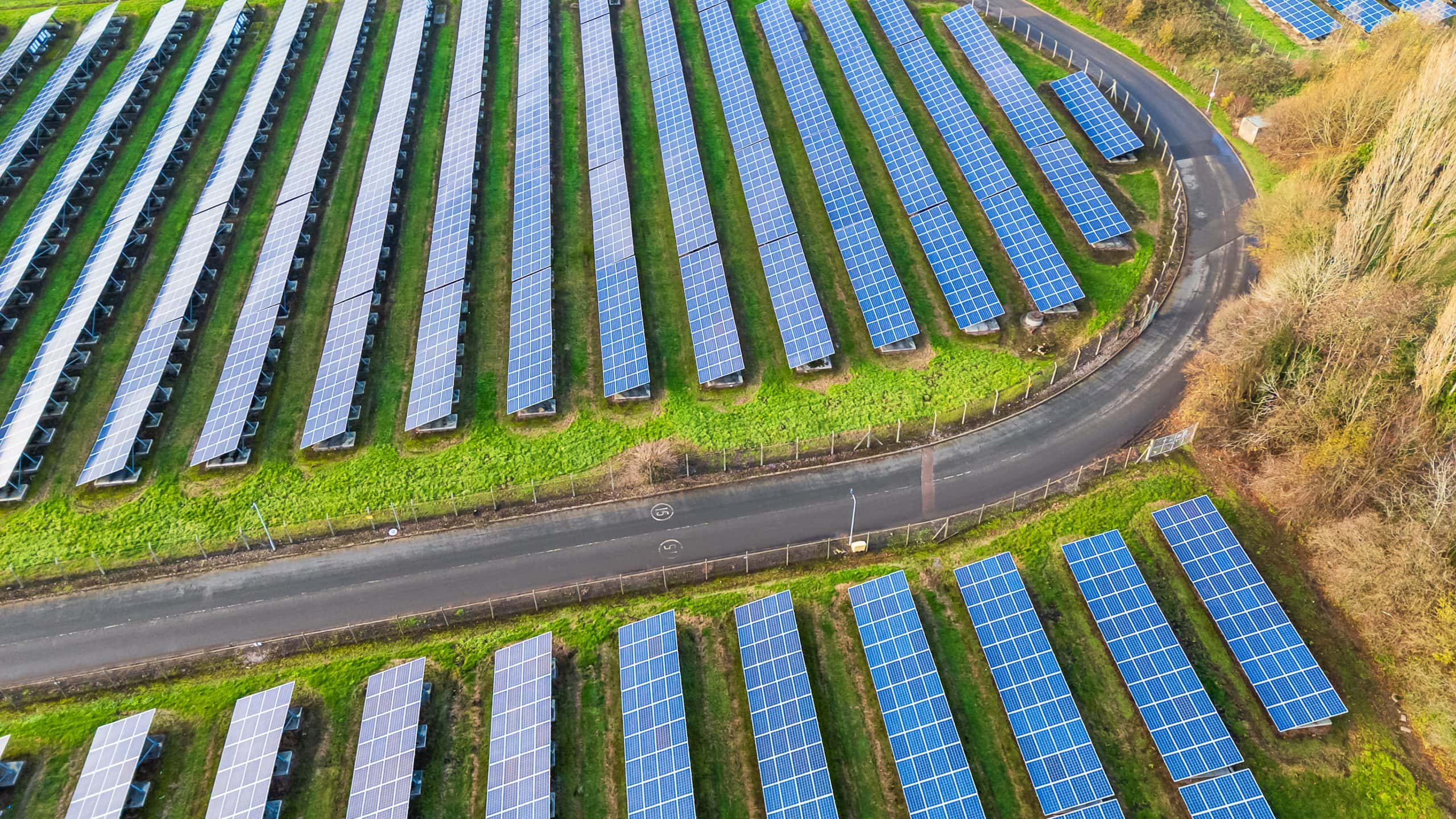
- A solar farm including ground mounted panels and other related infrastructure, producing up to c.60MW of electricity (AC)
- A 132kV/33kV substation located within the solar farm site itself
- Landscaping and environmental enhancements, including more than a 10% uplift in the biodiversity value of the site
- The solar farm is expected to have a lifespan of 40 years, after which it will be decommissioned and the site restored to agriculture.
The project team will be undertaking a series of on-site environmental assessments and surveys including ecology, noise, archaeology, land quality etc.
5. Why this site?
This site has been selected for several key reasons:
- It benefits from being close to an existing 132kV overhead line and pylon with confirmed spare capacity to accommodate the full output of the proposed solar project. Using existing grid infrastructure is efficient, less disruptive to local communities, more sustainable than building new grid transmission infrastructure and, overall, helps control the costs of electricity to the customer;
- Planning and environmental feasibility work indicate it is likely to be an appropriate site, with impacts capable of being appropriately mitigated. In particular it is well screened by existing mature vegetation; it is not within a designated landscape; it does not contain protected nature sites or heritage assets; is not an area of land at flood risk; and is easily accessible with safe options for site access;
- Sufficient land is available to accommodate the scale of infrastructure needed.
6. How will the site be accessed?
It is currently anticipated that the site could be accessed from a number of existing field gates, noting that these would be upgraded as part of the works to ensure there is sufficient space and visibility to ensure that vehicles accessing the site can turn into and out of the site safely. The future planning application will be accompanied by a Transport Statement and a Construction Traffic Management Plan in addition to site access design drawings.
7. Who will decide whether the project should be granted planning permission?
South Staffordshire Council, acting as the Local Planning Authority, will determine whether the proposal is granted planning consent.
8. What is the anticipated timeline of the project?
We will hold a public consultation on the proposals over summer 2026. Following this, we will review the feedback received and refine the plans before submitting a formal application to South Staffordshire Council in Winter 2026. The Council will then assess the proposals and decide whether to grant planning consent.
9. How will you capture feedback and engage with the community?
Qualitas Energy will be engaging with the local community, parish councillors, political stakeholders and relevant local organisations to understand feedback and discover how to best deliver value to the nearby community. The proposed Fraxinus Solar Farm represents a significant investment in the local area and ensuring a lasting and effective Community Benefit Fund is a priority for Qualitas Energy.
We will be completing a programme of consultation over the summer to speak with stakeholders and local residents who live nearby to the Fraxinus Solar Farm site, so that we can take their views into the design of the scheme well ahead of the submission of the planning application. This ensures we are designing the project to be as sensitive as possible to the local area.
10. If the project gets approved under planning, when will Fraxinus Solar Farm be constructed and operational?
We are currently working to a timeline that would see the decision made by South Staffordshire Council by Autumn 2027.
If South Staffordshire Council approve the application (a reasonable estimated timeframe would be Autumn 2027) it will take a few months to appoint contractors and then between 15–18 months to build. It could be operational by Autumn 2029.
11. How can I contact the Project Team to find out more and provide my comments?
You can get in touch with us in a number of ways, including:
- Email at [email protected]
- Call the project’s freephone voicemail message line on 0800 699 0081 and leave your message and contacts details (one of our team will call you back to answer your questions as soon as possible, between Monday-Friday, 9am-5pm, excluding Bank Holidays)
- Freepost at FREEPOST TC CONSULTATION (no further address or stamp required)
Environmental Impact
12. Will the proposed development result in the loss of agricultural land used for food production?
It is intended that agricultural use will continue on the Site through low intensity sheep grazing beneath the solar panels. Furthermore, the solar farm proposals are temporary and easily reversible at the end of their operational life when agricultural uses alone will resume.
The biggest threat to food security is climate change. Government climate modelling suggests that under a medium emissions scenario, climate change could reduce the proportion of Best and Most Versatile agricultural land from its current baseline of 38.1% to 11.4% by 2050, a 70% reduction. The use of this land for solar to help tackle climate change therefore supports and protects the UK’s food security, rather than harming it.
Currently solar farms occupy less than 0.1% of the UK’s land. To meet the Net Zero target, new solar farm capacity would at most account for 0.6% of UK land, less than the amount currently occupied by golf courses.
Source: UK Food Security Report 2021. Available at https://www.gov.uk/government/statistics/united-kingdom-food-security-report-2021
13. Will public footpaths be retained?
Yes. All existing routes within and in the surrounding area will remain accessible and will continue to provide opportunities to access and enjoy the local countryside.
14. Does the Fraxinus Solar Farm conflict with Green Belt protections?
The Fraxinus Solar Farm site is located in Green Belt. Green Belt land is protected from development unless developers demonstrate ‘very special circumstances’ as to why that type of development should be allowed there.
The need to tackle climate change and make the UK’s energy supply more affordable and secure have been accepted as being examples of ‘very special circumstances’ to justify developing solar farms in Green Belt, provided that there are also no other environmental or planning concerns which cannot be properly mitigated. Each development is judged on its own merits.
15. Will the solar farm make noise?
Solar farms have very few moving parts and generate very little noise. Transformers are required to convert the electricity to the correct voltage to export, and although not particularly noisy, they do generate a ‘low hum’ at close distances. A noise assessment will be undertaken to inform the design of the solar farm and will be submitted as part of the planning application. This will consider the potential for operational noise to occur, and the solar farm will be designed to reduce noise effects for surrounding receptors.
Community Benefit Fund
16. Will there be community benefits as part of Fraxinus Solar Farm?
Our renewable energy projects are designed to a high standard, embed best practice and seek to eliminate or address potential impacts as a matter of course.
Alongside the benefits that this project brings in terms of net zero, and energy security and affordability, Qualitas Energy also aims to bring localised benefits to the area by working with those local communities hosting this project through offering a Community Benefit Fund.
Qualitas Energy will provide a community benefit fund, worth approximately £1.2 million (index linked) over the 40 year course of the project, which will provide financial support for activities or projects in the local area of the solar farm.
This fund sits entirely outside of the planning process, does not inform the determination of the planning application and is an approach promoted by Government and delivered by some solar developers to ensure communities hosting important energy infrastructure see local benefits from those projects. Qualitas Energy is very supportive of such an approach.

You can get in touch through any of the following methods:
- Email: [email protected]
- Freephone: 0800 699 0081 (during normal office hours (Monday to Friday 9am to 5pm excluding public holidays)
- Post: FREEPOST TC CONSULTATION (no further address or stamp required)